
Last updated November 21, 2026
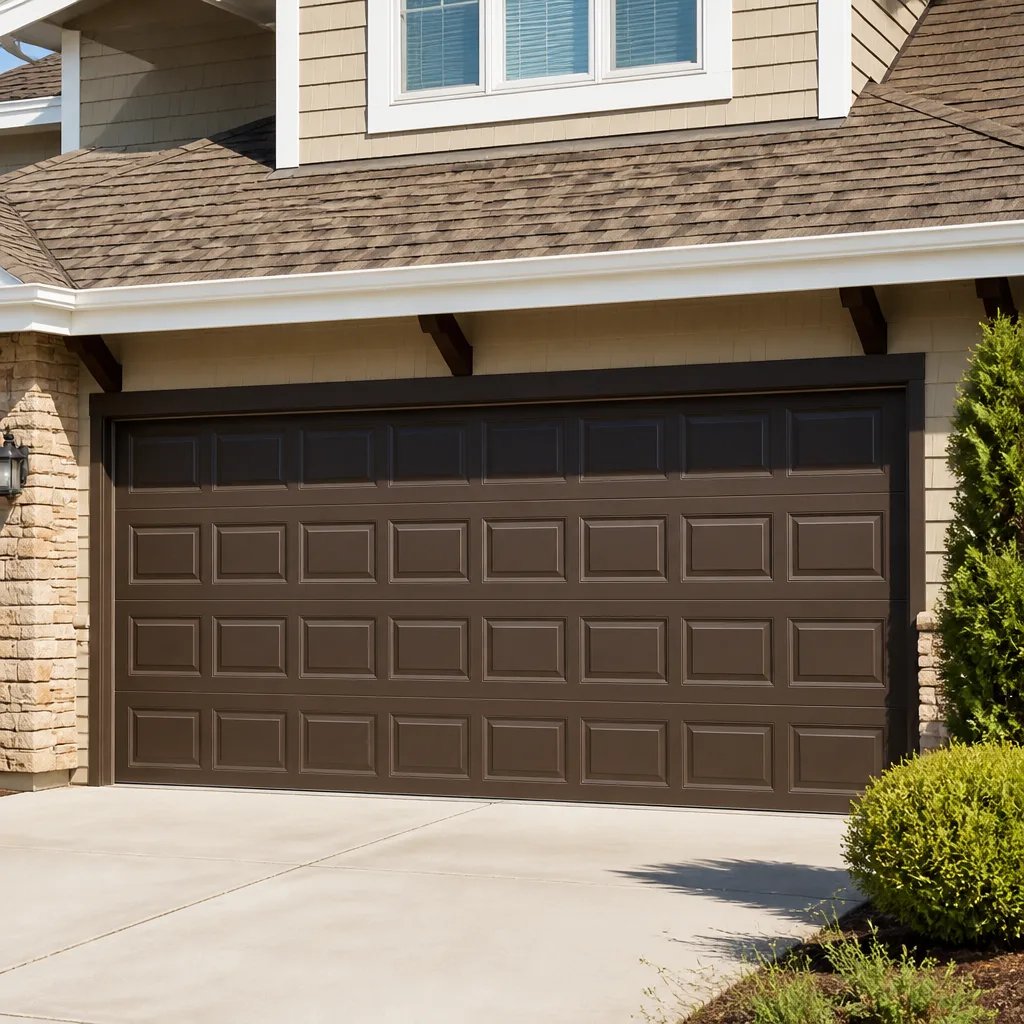 Raised-panel steel
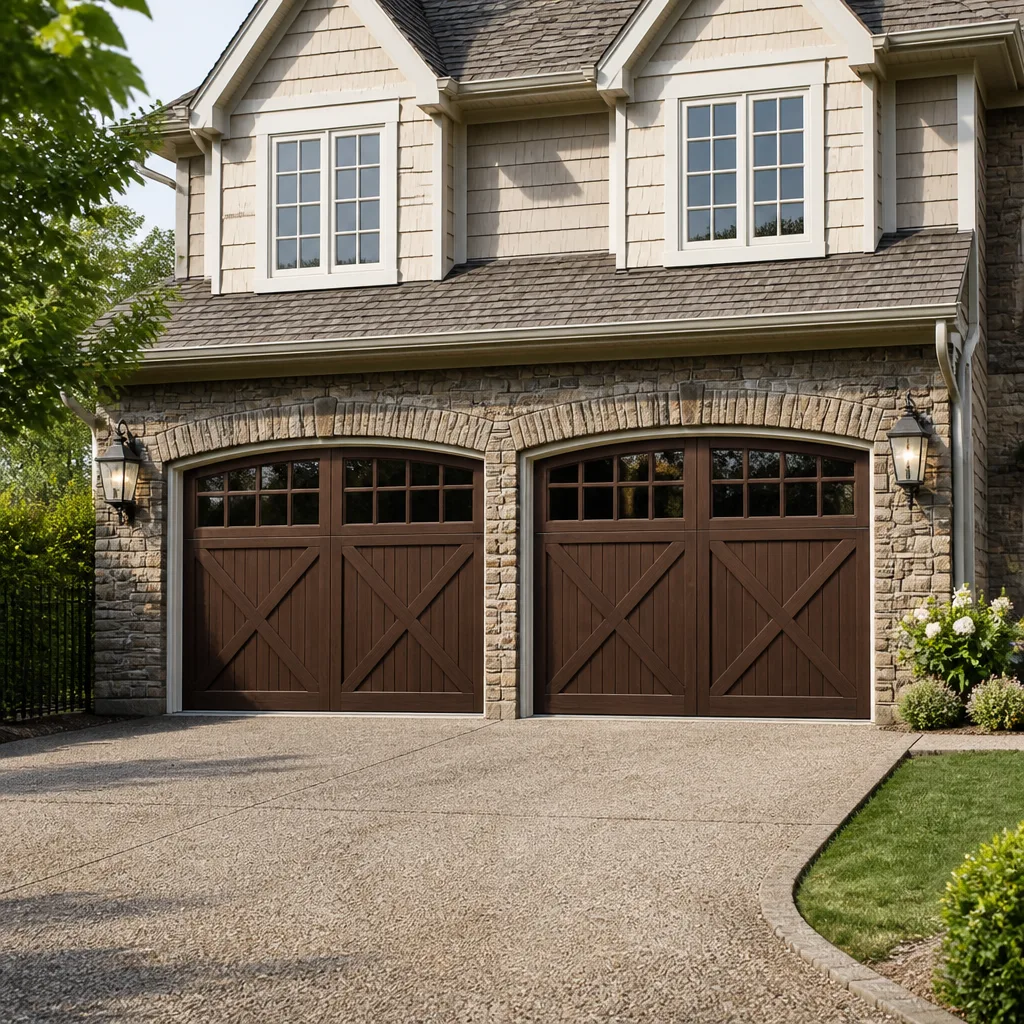 Carriage house
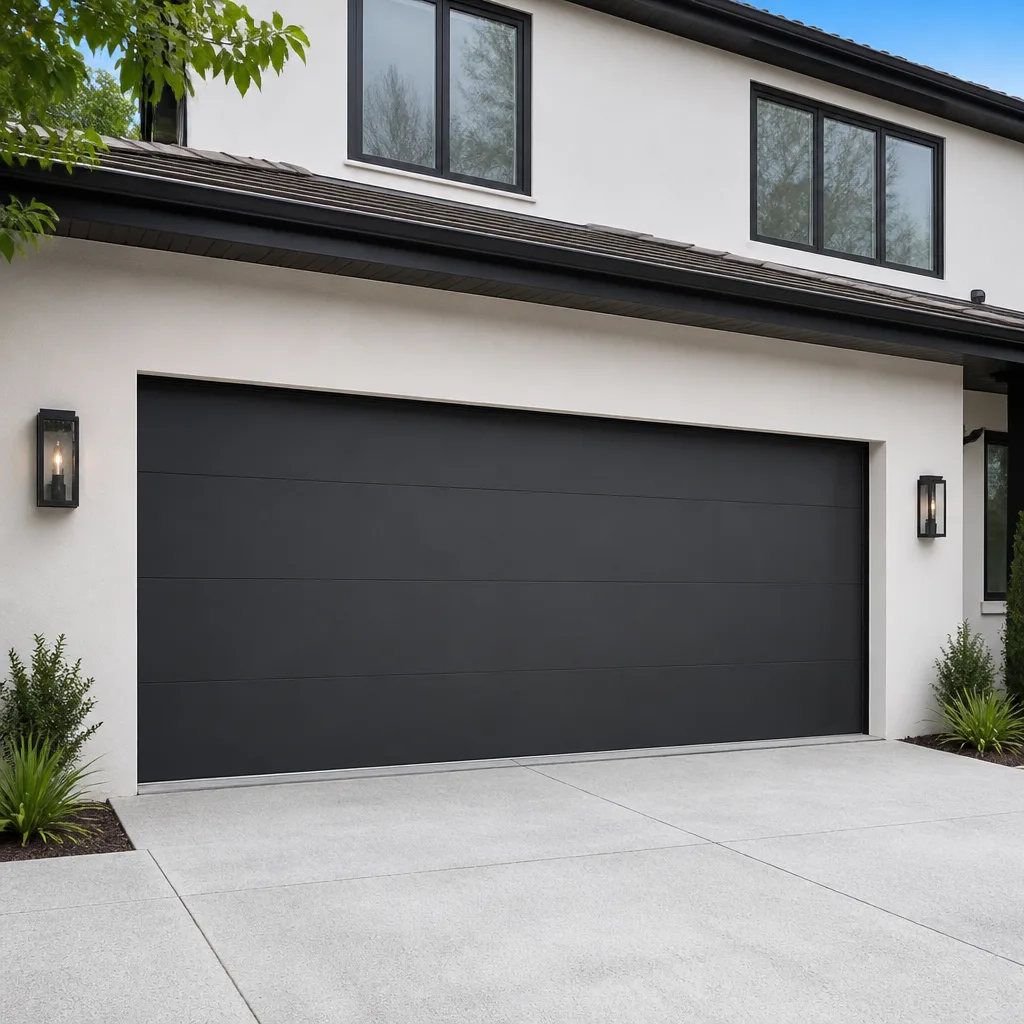 Modern flush
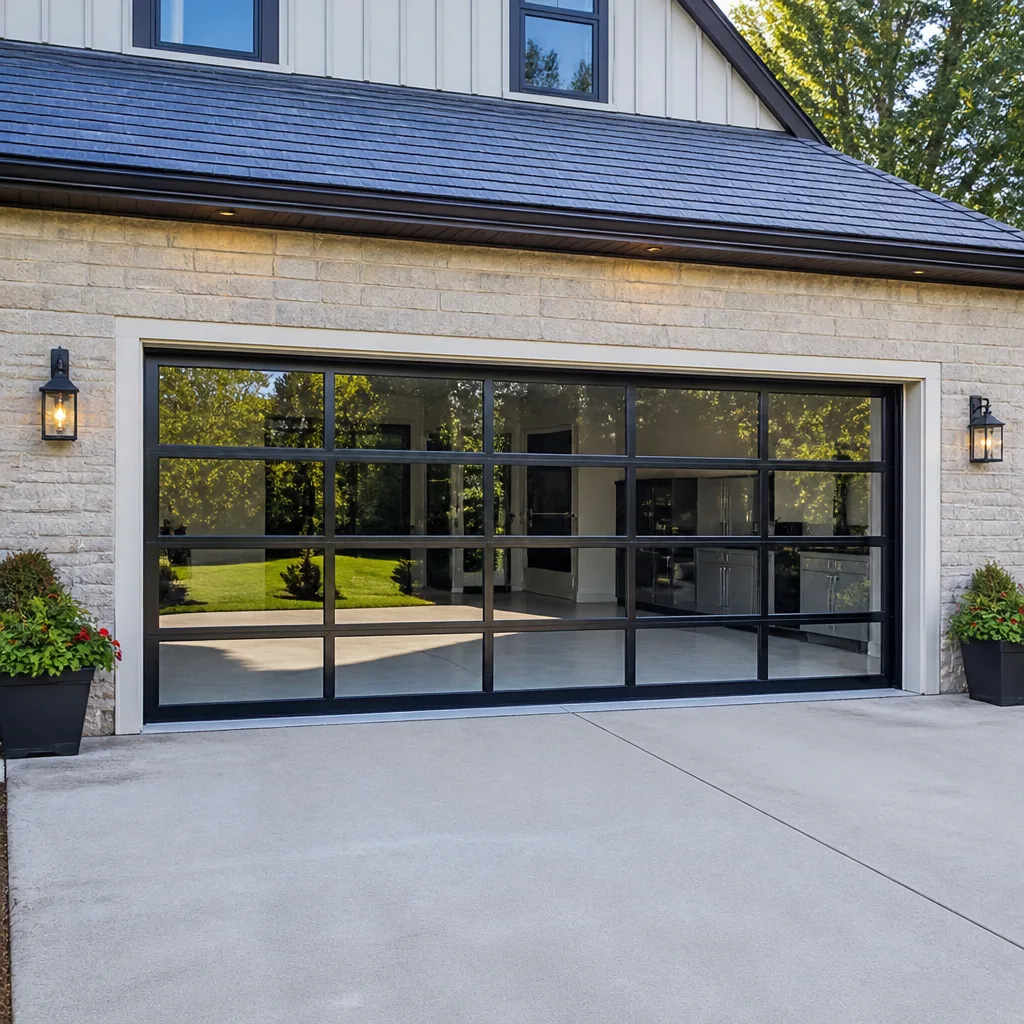 Full-view glass
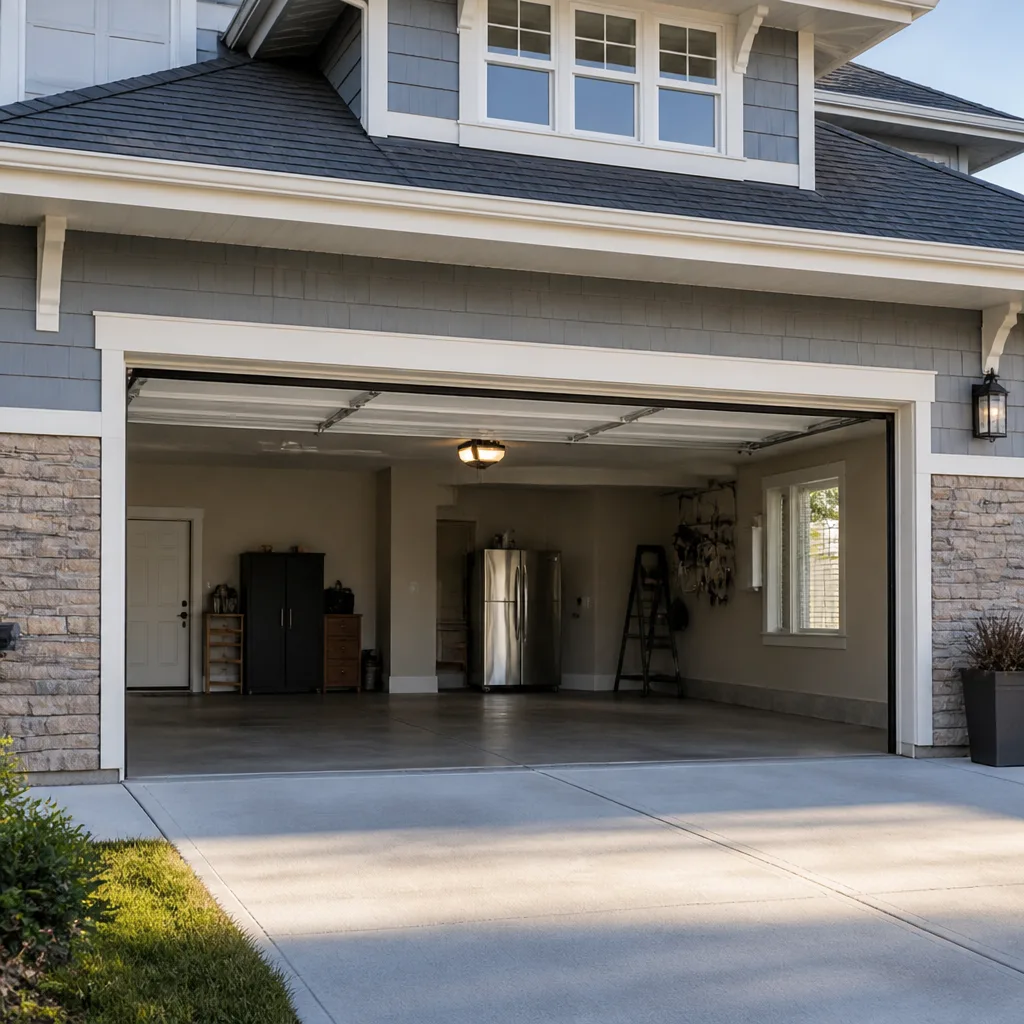 LiftMaster openers
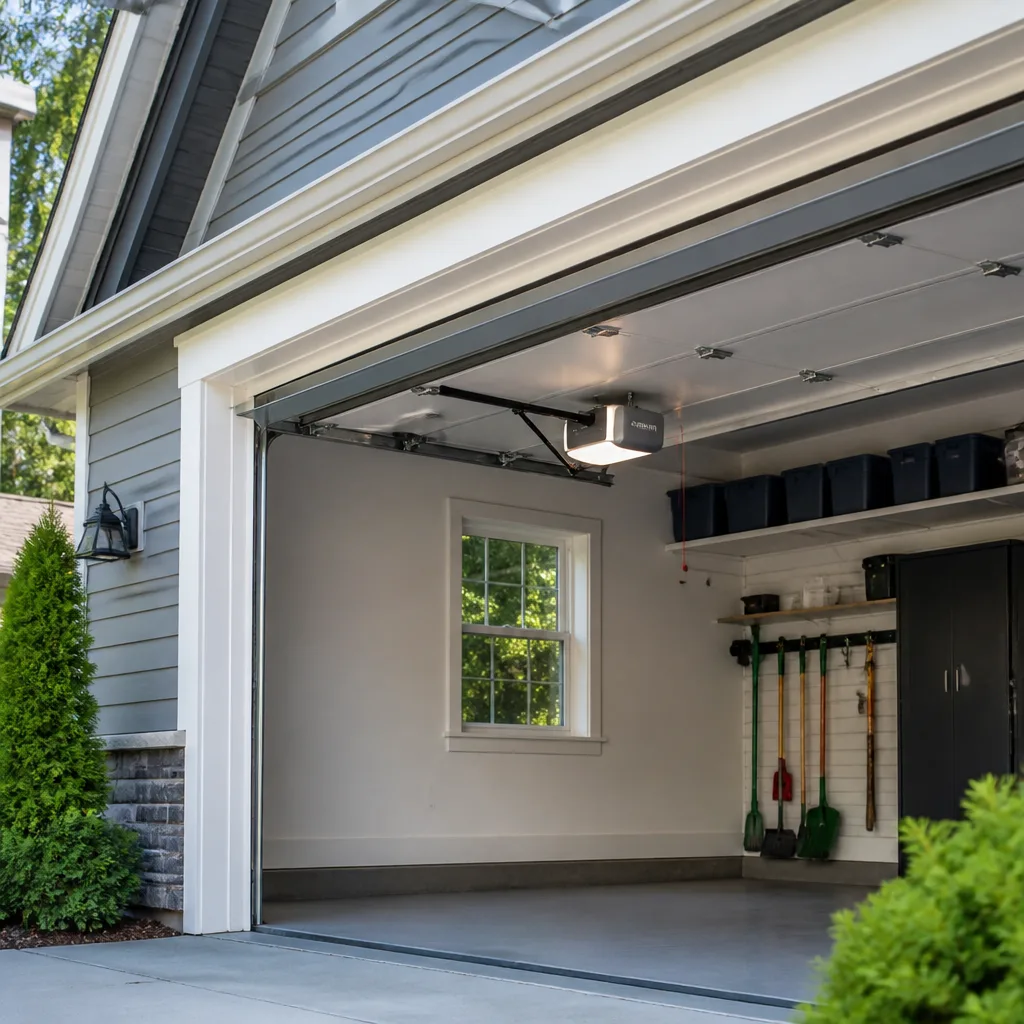 Chamberlain openers
Full 25-point door and opener safety check with every visit - springs, cables, rollers, tracks, and your LiftMaster or Chamberlain opener included
You get a price before we start. It does not change when the pro arrives.
Get your free estimateGarage Door Emergency Preparedness Guide for Tallahassee Homes
Most Tallahassee homeowners worry about their roof when a tropical system heads into the Gulf. In our experience, it’s the garage door that gives first. A door that fails during a storm doesn’t just leave your car exposed, it opens the whole house to wind pressure that builds from the inside and pushes on everything above it. We’ve pulled plenty of doors out of wreckage after Leon County storms, and the pattern is consistent: the weak point is usually the door, not the framing. This guide walks you through what to do before a named storm makes landfall, what to do when the power dies, and how to inspect your door safely once the wind has passed.
Quick Answer
A storm-ready garage door in Tallahassee needs three things: bracing rated for wind, a plan to disconnect and lock the door manually before landfall, and a way to secure the opening if the opener loses power. After a storm, inspect the springs, cables, tracks and panels before you run the door again, and call a professional if you see bent tracks, snapped cables, or panels that have pulled away from the framing. Preparing now costs far less than recovering later.
Styles & brands we work with
- Raised-panel steel
- Carriage house
- Modern flush
- Full-view glass
- LiftMaster openers
- Chamberlain openers
Table of Contents
- What to Do Before a Named Storm
- Wind-Rated Doors and How to Check Yours
- Power Outage Protocols: Opener, Manual Operation and Securing the Door
- How to Disconnect and Secure a Garage Door Before Landfall
- Post-Storm Inspection: What to Check Before You Operate the Door
- Same-Day Safety Call vs. Wait for the Repair Backlog
- Emergency Contact Protocol for Storm Season
- Building a Garage Door Storm Kit
What to Do Before a Named Storm
Preparation before a storm hits matters more than anything you can do during or after it. The window to brace a door, test the manual release, and clear the tracks closes as soon as the outer bands arrive. If you own a rental property near Florida State University or manage a small complex off Apalachee Parkway, put the same steps on your tenants’ pre-storm checklist. A door left half open or jammed when wind arrives becomes the weakest point in the building envelope.
The good news is that most of the work takes a couple of hours and needs no special tools. Here is what we recommend doing the moment a storm enters the forecast cone:
- Clear the garage floor. Anything that could become airborne, from paint cans to bicycles, either comes inside or gets strapped down. When wind gets in, loose items become projectiles that hammer the door from the inside.
- Test the manual release. Pull the red handle once while the door is closed, then re-engage it. You want to know it works before you need it. If it feels stuck or won’t re-engage cleanly, that’s a repair to schedule now, not during a storm watch.
- Lubricate the tracks and rollers. A door that runs smooth when the power is on is far easier to lift by hand if the power goes out.
- Inspect the weather seal at the bottom. A damaged bottom seal lets driven rain in and weakens the door’s fit against the frame when wind pressure builds.
- Check your bracing. If your door didn’t come with a wind bracing kit, this is the time to add one. Bracing is the single cheapest upgrade you can make, and it’s the one that matters most.
- Take a photo of the door and opener. If a claim becomes necessary, you’ll have a baseline of the condition before the storm.
Do these steps early, not the day the storm arrives. When a system is bearing down on Tallahassee, everyone is looking for plywood and generators at the same time, and hardware stores empty out fast.
Wind-Rated Doors and How to Check Yours
A wind-rated garage door is built and tested to withstand specific wind pressures, and in many Florida jurisdictions it’s required for new construction and major replacements. If you’re not sure whether your door meets the standard, don’t guess. A phone call to the city or county building department will tell you what’s required for your property, and you can cross-check that against what’s actually stamped on your door or listed on your opener’s documentation. Many doors carry a manufacturer label on the inside panel listing wind-load ratings. If the label is missing, a technician can help identify the door model and tell you where it stands.
Doors from manufacturers like Clopay and Amarr are often available in wind-rated configurations, and these are the doors we see most often on newer Tallahassee homes. If you’re replacing a storm-damaged door, ask specifically about the wind rating for your area, not just the style and color. A door that looks identical to a neighbor’s may have entirely different reinforcement behind the face panel.
What to look for when you check your own door:
- A manufacturer label or stamp on the back of a panel, usually near the bottom or one of the stiles.
- Horizontal reinforcement struts running across the back of each panel section. These are the visual sign of a braced door.
- Heavier-gauge hinges and a reinforced center bracket, which together tie the door sections to the framing more firmly.
- Documentation from the original install, if the previous owner kept it. This is the fastest way to confirm the door’s design pressure rating.
If your door has none of these, that doesn’t mean it will fail, but it does mean you should treat it as unverified until a professional takes a look. Upgrading a door or adding bracing is not a storm-day task. It’s a pre-season one.
Power Outage Protocols: Opener, Manual Operation and Securing the Door
Power loss is the most common post-storm garage scenario in Tallahassee, and it’s also the one most homeowners handle badly. A door that won’t open when the power is out can trap a car, block access to your generator, or leave the garage exposed if the door is stuck partially open. The good news is that almost every residential opener has a manual release that lets you operate the door without power, and some newer openers from LiftMaster and Chamberlain include battery backup that lets you keep running the door when the grid goes down.
Here is the order to work in when the lights go out:
- Don’t force the door. If the opener is engaged, pulling or lifting the door will fight the drive mechanism and can damage the opener or the door panels.
- Find the manual release handle. It hangs from the trolley on a short red cord. On most openers it’s the only red thing on the unit.
- Stand clear of the door path and pull the handle straight down. This disconnects the trolley from the door arm, and the door should now move by hand.
- Lift the door slowly. A properly balanced door takes one hand to lift. If it takes real effort, the springs or balance are off, and the door should not be operated by hand until a technician checks it.
- Prop the door securely if you need it open. Use a clamp or locking pliers on the track above a roller to prevent a sudden drop. Never rely on the opener to hold a door open with the trolley disconnected.
- Re-engage the trolley by hand once power returns, or pull the release cord again if the opener is a newer model with a reset feature. Do not slam the door into the trolley.
If the garage is attached to the house and the door won’t close at all, that’s a security gap you don’t want to leave open overnight. A properly adjusted manual release plus a track clamp will let you lock the door down hard enough that nobody can lift it from outside.
How to Disconnect and Secure a Garage Door Before Landfall
Before a named storm makes landfall in Tallahassee, we recommend disconnecting the door from the opener and manually locking it down. This does two things: it removes the opener’s drive system from the equation, and it ensures the door stays in its closed position if the power flickers or fails mid-storm. You don’t want the opener trying to lift a door that the wind is pushing against.
The steps:
- Close the door fully and wait for the opener to finish its cycle.
- Pull the red manual release handle straight down until you hear or feel the trolley disconnect.
- Confirm the door is seated against the floor and the bottom seal is flat.
- Install a track clamp or locking pliers on the vertical track just above the bottom roller on each side. This prevents the door from being lifted from outside.
- Slide the deadbolt or slide lock if your door has one. Most modern doors do, on one side at minimum.
- Visually confirm that nothing is holding the door open by even an inch. Wind will find any gap and start working the panels.
- Leave a note near the opener or the wall button so no one in the household re-engages the opener during the storm and pulls the door against the clamps.
This is also the moment to look at the door itself. If any panel is loose, if a strut is bent, or if the door’s alignment looks wrong, don’t try to run it. A door that’s already compromised won’t survive the pressure, and the safer move is to have it serviced before the storm closes in. Book a garage door repair visit early if you spot anything that looks off.
Post-Storm Inspection: What to Check Before You Operate the Door
After a major wind or flood event, don’t press the opener until you’ve walked around and looked at the door from the inside. This is the step most homeowners skip, and it’s the one that turns a repairable door into a broken one. A door that took wind pressure may look fine from the driveway but have a bent track or a cable that’s ready to let go. Running it with the opener can compound the damage, or worse, drop the door.
Work through this inspection sequence:
- Look at the panels from inside. Are any sections bowed, dented, or pulled away from the horizontal hinges? A bent top section often means the door took significant pressure.
- Check the vertical tracks. They should be straight and parallel. Even a slight bend will throw the rollers off and cause binding.
- Examine the springs and cables. Look for broken spring coils, frayed cable strands, or cables that have come off their drums. Do not touch a cable under tension. Ever.
- Look for water intrusion and rust around hinges, bottom brackets, and the bottom seal. Storm-driven rain gets where it shouldn’t, and rust on moving parts is a clear sign to schedule service.
- Check the door’s balance by hand. With the door disconnected, lift it partway and let go. It should hold roughly in place. If it slams down or drifts up, the springs are compromised.
- Test the safety reverse once you’re ready to run it with the opener again. Place a piece of wood or a roll of paper towels under the door and confirm it reverses on contact.
If any of these checks fail, stop and call a technician. In our experience, the doors that get run post-storm without an inspection are the ones that come in for a full garage door opener repair a week later because the opener was fighting a bent track.
Same-Day Safety Call vs. Wait for the Repair Backlog
After a storm, garage door companies in Tallahassee get flooded with calls. Knowing which issues are true safety emergencies and which can wait a few days is the difference between a prompt response and a service call that could be scheduled for next week. Here’s how we sort it on our end.
Call the same day if:
- The door is stuck open and you can’t get it closed. This is a security and weather exposure problem, and it’s the highest-priority scenario after a storm.
- A spring is broken or a cable has snapped. The door is unbalanced and dangerous to operate. Spring repair is a safety job, not a DIY job, and shouldn’t wait.
- A panel is loose or hanging, or the door has separated from the track entirely.
- The opener runs but the door doesn’t move, or the door moves unevenly and binds.
- You see any sign of water intrusion in the opener housing or wall control wiring.
It can usually wait a few days if:
- The door operates normally, closes fully, and the opener is functioning, but you noticed cosmetic dents or scuffs.
- The weather seal is torn but the door still seats correctly.
- A remote or wall button doesn’t work but the door runs from the other control.
- You want a cosmetic upgrade or replacement after the storm passes.
If you’re not sure which category your issue falls into, call. A quick conversation will sort it. We answer 24/7. Fast dispatch from 7am to 7pm, Sunday through Friday.
Emergency Contact Protocol for Storm Season
Have the number handy before the storm, not after. During a weather emergency, the cell network is often overloaded, the power may be out, and searching for a phone number online gets harder than it should be. Put the number on a sticky note on the inside of the garage door, in your phone contacts, and on the fridge.
What to have ready when you call:
- Your address, clearly stated. Cell coverage may drop mid-call.
- The door brand and opener brand, if you know it. LiftMaster, Chamberlain, Genie, Craftsman and others each have quirks, and knowing the brand up front saves diagnostic time. We’re factory-familiar with all of the major residential brands.
- A description of the problem: is the door stuck open, stuck closed, off the track, or will it just not respond to the opener?
- Whether the door is currently a safety or security risk: is the house exposed, is a car trapped, is there a panel hanging?
- Whether you can safely get the door closed manually in the meantime.
For known brands like Clopay and Amarr doors with matched openers, having that information ready can help book the right parts before the technician arrives. If a door needs to be replaced entirely after a storm, that’s a garage door installation that we can scope and quote as soon as the weather clears.
Building a Garage Door Storm Kit
You don’t need much to be ready for the next storm. A small kit stored near the garage door costs very little and covers almost every situation you’re likely to face before, during, and after a storm. Put it in a plastic bin with a lid, label it, and don’t let it get absorbed into the general tool collection. Storm kits disappear when you need them.
What belongs in it:
- Two C-clamps or locking pliers sized for your vertical track. These are your manual door locks.
- A spray can of white lithium grease for the tracks and rollers.
- A flashlight and spare batteries. Not the phone flashlight. You’ll want both hands free.
- Work gloves for handling anything sharp around the door.
- A printed copy of this guide and your garage door brand model information.
- The phone number for your garage door company, written on a card. Ours is (866) 374-8948.
- Zip ties and a small roll of duct tape to secure hanging cables or loose parts.
Add a note inside the lid with the phone number of your power company and a short checklist, and you’re set. Re-check the kit at the start of each storm season, swap the batteries, and confirm the manual release still works.
Common Mistakes to Avoid
- Waiting until the storm is in the forecast cone to prepare. Stores sell out and technicians get booked solid. Prep in May or early June, before the first system forms in the Atlantic.
- Forcing a door by hand with the opener engaged. This stalls the opener motor or snaps the trolley arm. Always pull the red release handle first.
- Trying to fix a broken spring yourself. Springs are under heavy tension and let go without warning. This is the one job on the door that should always go to a trained professional.
- Leaving the manual release disengaged after the storm. Once the power is back, re-engage the trolley by hand before pressing the opener. Slamming the door into the trolley damages both.
- Skipping the post-storm inspection because the door “looks fine.” Bent tracks and compromised cables are often invisible from the driveway.
- Assuming all doors are wind-rated. A door that looks identical to your neighbor’s may not have the same reinforcing. Check the label or have it looked at.
- Not having the phone number ready. When the storm hits, cell service is unreliable. Write the number down and keep it somewhere physical.
See the difference
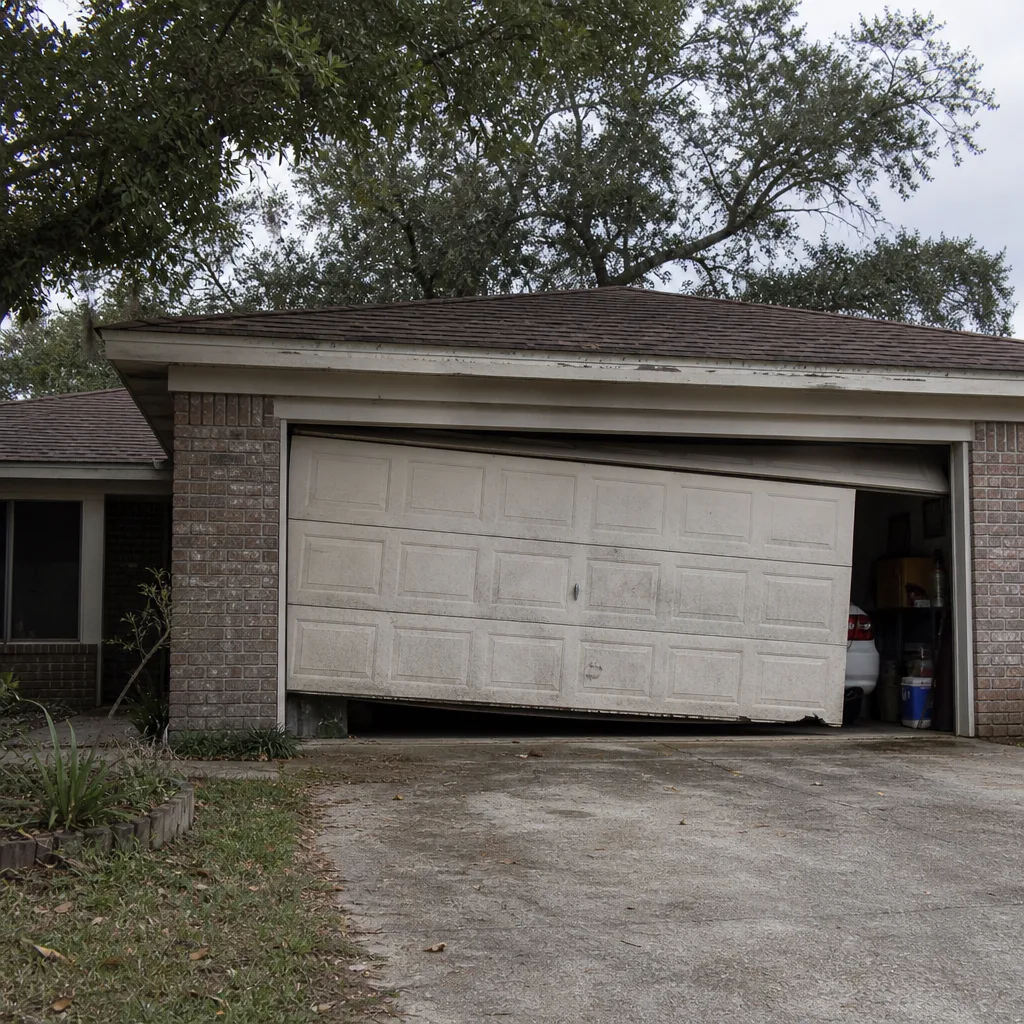 Before
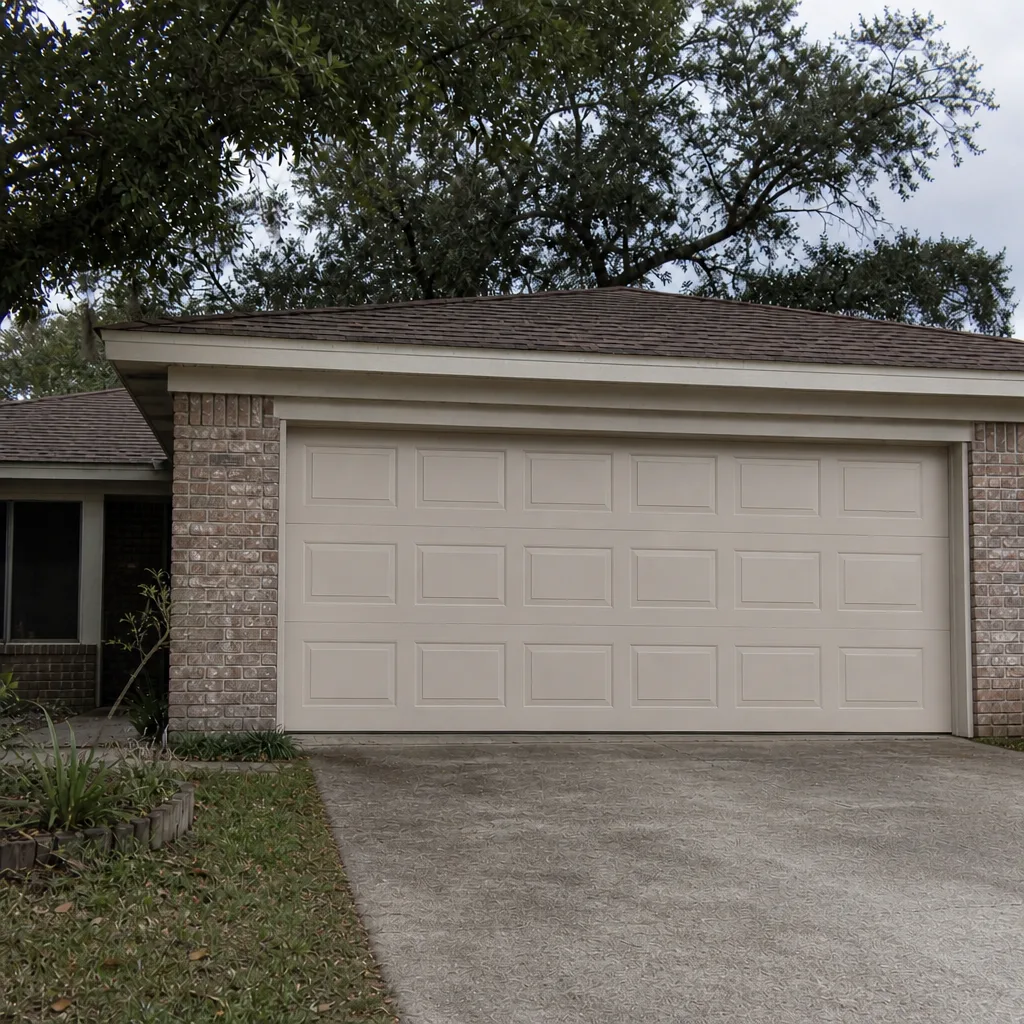 After
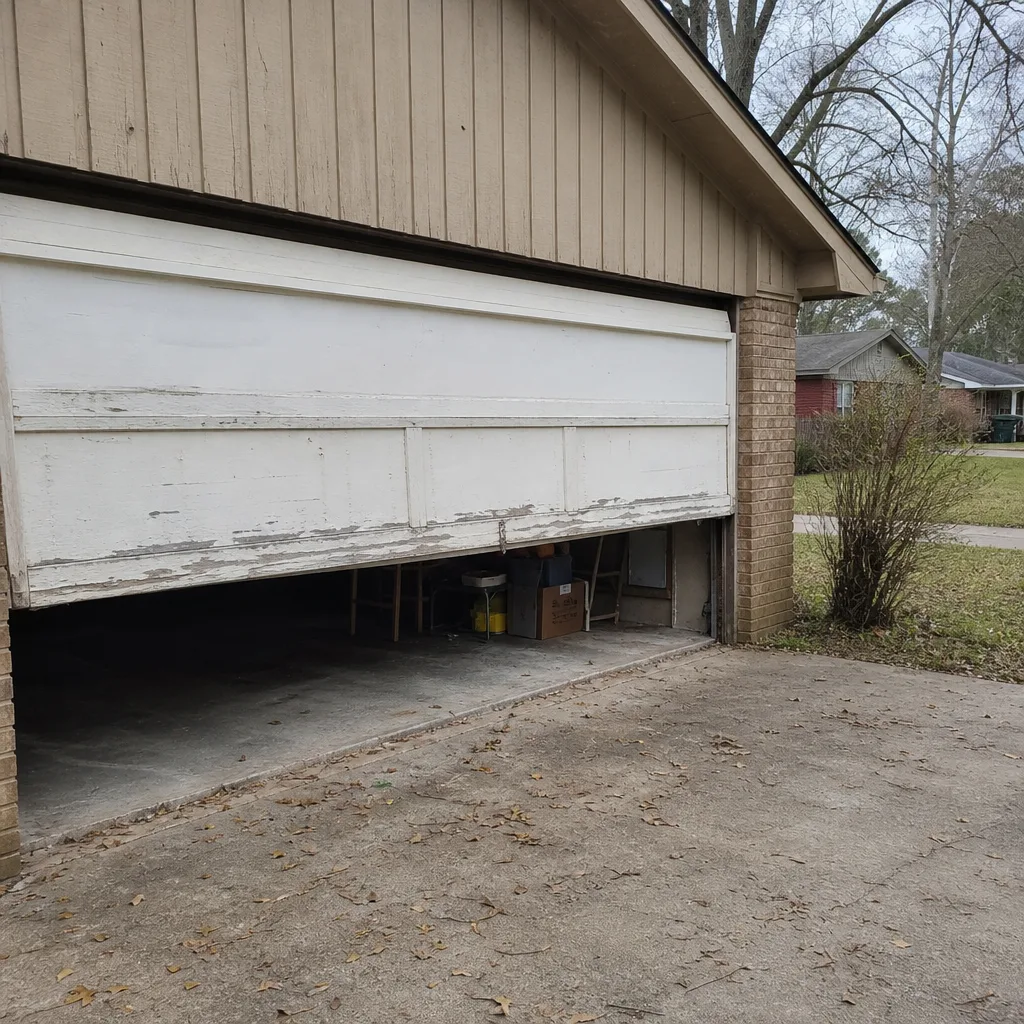 Before
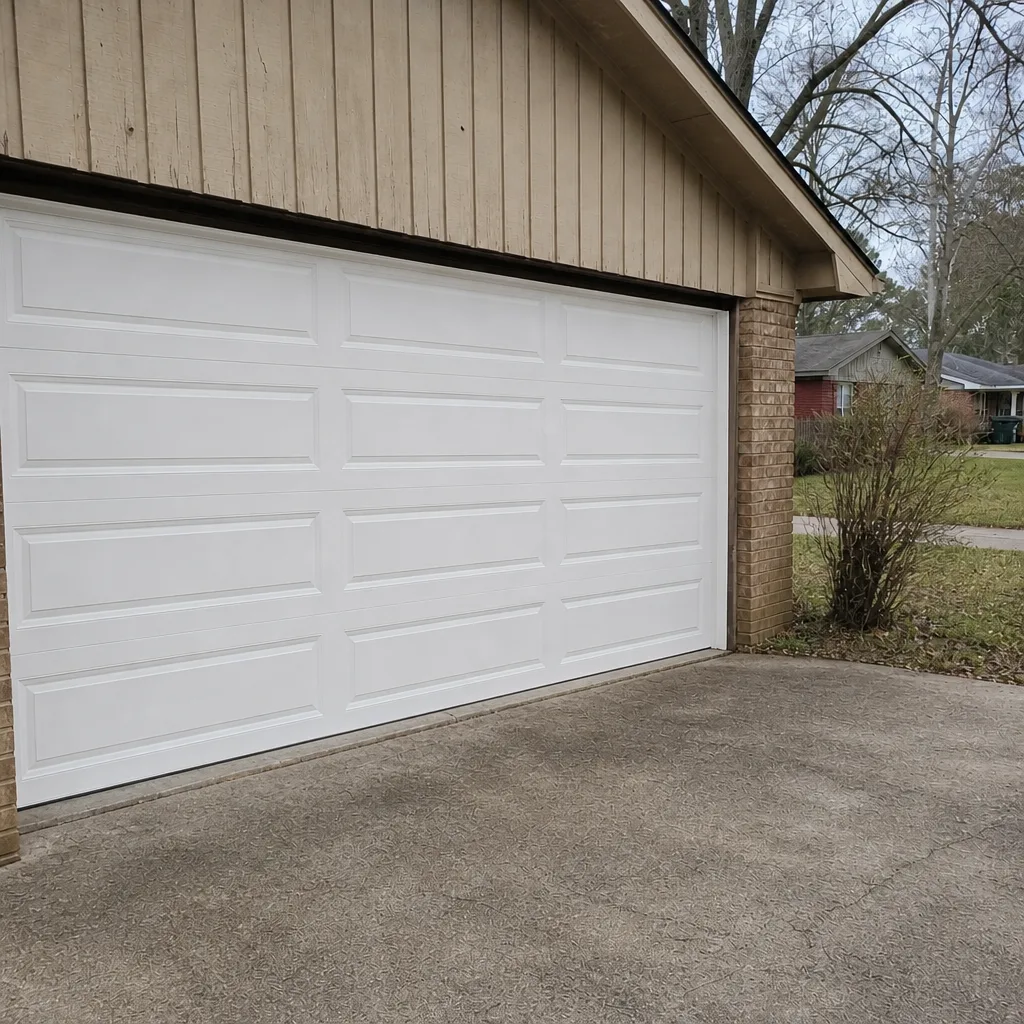 After
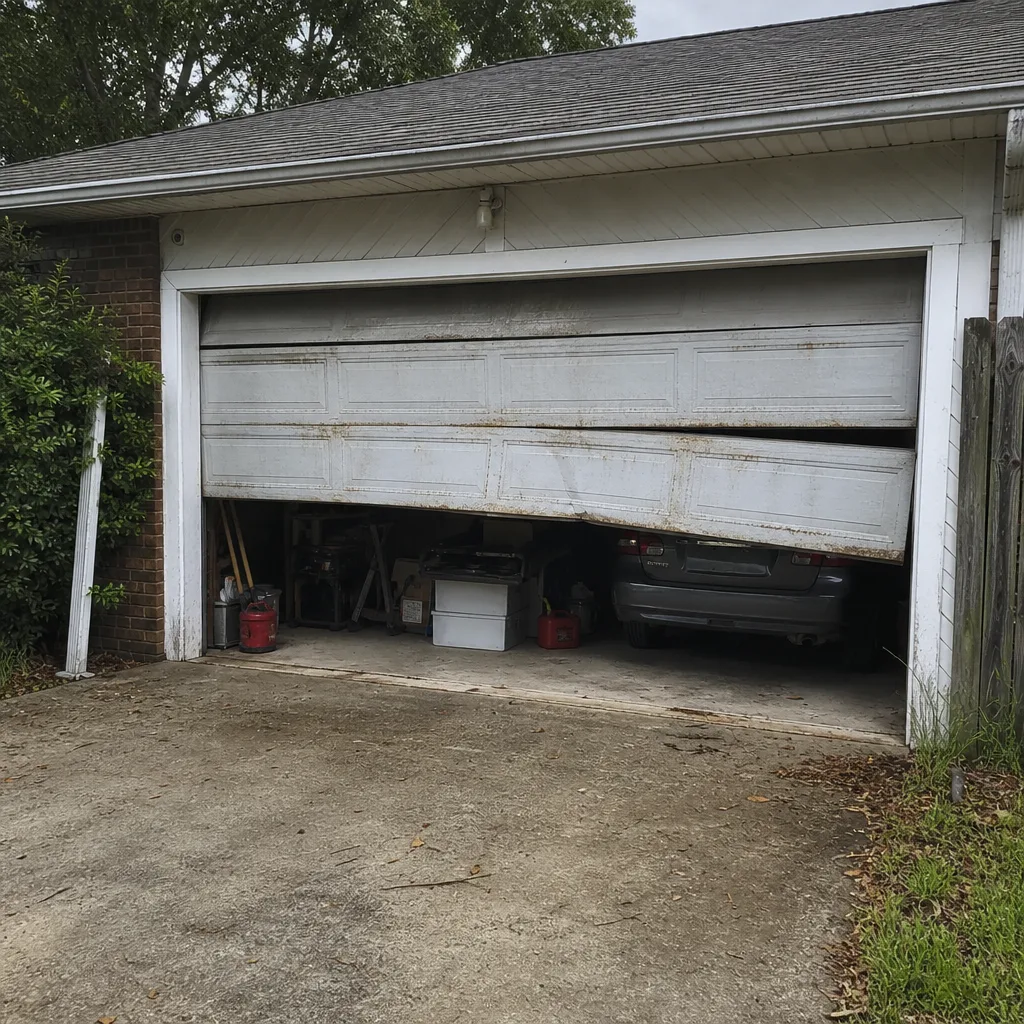 Before
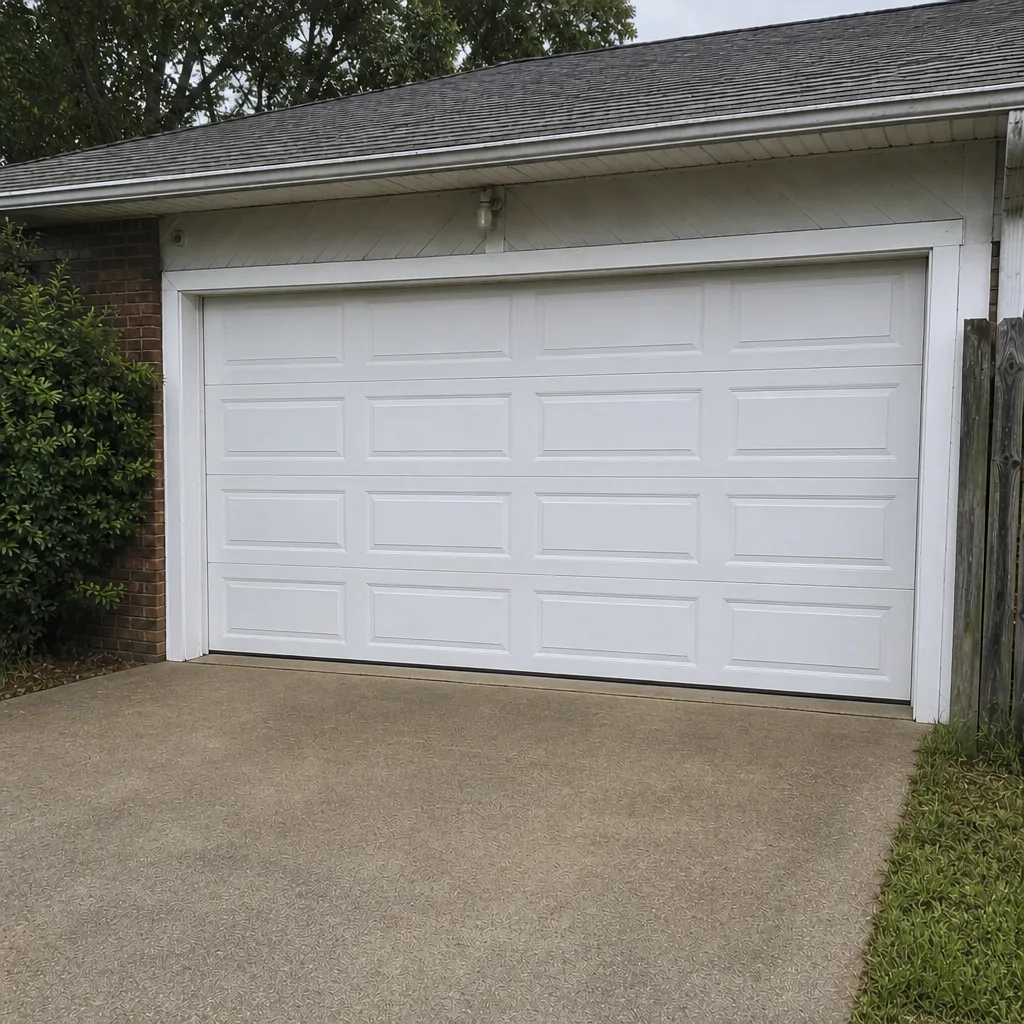 After
When to Call a Professional
Call a professional when the door is stuck open and can’t be secured manually, when any spring, cable, or hinge feels loose or broken, or when the door has separated from the track. Call if you’re not sure whether the door is safe to run. These are not jobs to figure out by watching a video. Spring repair in particular is one of the most dangerous parts of any garage door, and one misstep can cause serious injury. Our technicians have up to 15 years of experience and handle spring repair as a dedicated service, not an add-on. Tallahassee Garage Door Repair Co offers free estimates in Tallahassee. Call (866) 374-8948. We answer 24/7. Fast dispatch from 7am to 7pm, Sunday through Friday.
Frequently Asked Questions
Yes, as long as the door is properly balanced. Pull the red manual release cord hanging from the trolley, and the door can be lifted by hand. A balanced door takes one hand. If it takes real effort or won’t stay where you leave it, stop and call a technician before forcing it further.
Spring repair in the Tallahassee area typically falls in the $180 to $340 range for a single spring, and a matched pair usually runs about twice that because both are replaced together. The written estimate sets the price, and it’s free. Call (866) 374-8948 for an exact quote. We answer 24/7.
Check the manufacturer label on the inside panel for a wind-load rating, and look for horizontal reinforcement struts across the back of each section. If you can’t find a label, your city or county building department can tell you what’s required for your property. A technician can also identify the door model and tell you where it stands.
Inspect the tracks, springs, and cables from the inside before running the opener. If anything looks bent, snapped, or off its drum, stop and call for service. If the door is stuck open and you can’t get it closed, that’s a same-day security issue. Call (866) 374-8948. Fast dispatch from 7am to 7pm, Sunday through Friday.
Some do. Battery backup openers from LiftMaster and Chamberlain can run the door a limited number of cycles when the grid is down. Not all homes have them. If yours doesn’t, manual operation with the release cord is the way through.
Usually not the same day. Storm damage drives a backlog, and a full replacement needs a measure, an order, and a scheduled install. What can happen quickly is securing the opening and getting a temporary barrier in place. Call (866) 374-8948 to get on the schedule as soon as the weather clears.
The Bottom Line
Your garage door is one of the few parts of your home that takes the full force of a storm head-on, and it’s also one of the easiest to prepare. Brace it, test the manual release, keep a small storm kit nearby, and inspect it before you run it after any major weather event. Tallahassee sits in a storm corridor that demands this kind of preparation every year, and the homes that come through a season best are the ones that planned ahead. Spring, cable, and track issues always belong with a trained professional. For everything else, the steps in this guide will get you through the season.
If you’re not sure where to start, or you’ve spotted something on your door that needs a look before the next storm, we’re ready to help. Tallahassee Garage Door Repair Co handles repair, opener service, installation, spring repair, and emergency calls for Leon County homes. See our full range of services at Tallahassee Garage Door Repair Co, or call (866) 374-8948 for a free estimate. We answer 24/7. Fast dispatch from 7am to 7pm, Sunday through Friday.
Written by the team at Tallahassee Garage Door Repair Co.